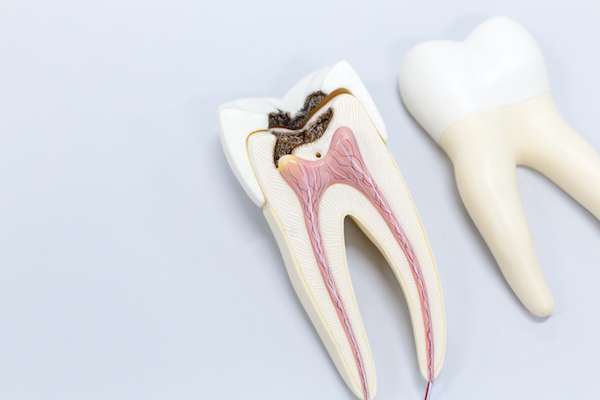
Anatomy of a tooth
Each tooth is made up of four layers of tissues. Three of these layers, including the enamel, dentin, and cementum, are hard substances that cover and protect various parts of the tooth. The fourth type is called the pulp, and it is a soft tissue that contains nerves and blood vessels. The pulp chamber is responsible for helping the root of a tooth grow during development.
After a tooth is fully developed, it can survive without the pulp because it receives nutrients from surrounding tissues. For this reason, the tooth does not become "dead" following a root canal treatment.
4 steps to root canal treatment
A general dentist recommends root canal treatment as an effective way to save a tooth rather than removing it. Below are the four steps followed during a root canal.
1. X-rays
First, the dental professional takes X-rays of the tooth and surrounding bone. This provides a clear picture of the structure and condition of the tooth. After the X-rays are completed, a dental dam is placed to protect the site from saliva and keep it clean.
2. Pulpectomy
Using a small drill, an opening is created at the top of the tooth to access the dental pulp. Small files are used to extract the damaged pulp and shape the interior of the tooth. The dental professional may irrigate the tooth chamber to ensure the area is clear of infection. An antimicrobial solution is often used to kill bacteria in the tooth to prevent further infection.
3. Filling
Once the interior of the tooth is cleaned and dried, a material, called gutta-percha, is used to fill the tooth. The opening is then closed with a temporary filling. The patient schedules a follow-up appointment to allow time for healing and for a permanent crown to be made.
4. Permanent Crown
After several weeks, the general dentist places a permanent crown over the tooth. If the crown needs additional support, a metal post may be placed inside the tooth to make it more stable.
Conclusion
Though a root canal involves removing the nerves from inside a tooth, the tooth continues to function as normal. The nerves play an insignificant role in a fully developed tooth; thus, the tooth is still alive. A root canal is a beneficial treatment that saves a tooth from extraction and allows a patient to maintain a healthy smile. A patient who practices good oral care and visits a general dentist regularly can expect a restored tooth to last a lifetime.
Request an appointment or call Allure Dental at 312-598-1770 for an appointment in our Chicago office.
Related Posts
Practitioners of general dentistry provide a comprehensive list of dental procedures for patients. Your general dentist is your primary dental caretaker. Dentists evaluate tooth and gum health and treat cavities, abscesses, and dental abnormalities. As part of preventative treatment, dental professionals also perform teeth cleanings.Regular dental cleanings remove plaque, stains, and tartar from your teeth.…
A lot of general dentistry care is focused on the prevention of tooth decay. It is a common issue, and one that can be reversible in the early stages; however, if left untreated, it can become serious. Knowing the signs of tooth decay and understanding the risks of not giving it the proper care can…
With all the information circulating about sugar, you may wonder if avoiding sweet treats entirely benefits your oral health. As any general dentistry office will likely tell you, cutting sugar from your diet can have a significant positive impact on your teeth and gums.Your mouth is full of bacteria. This is not an entirely negative…